Defensible Destruction: A Retention Matrix That Reduces Discovery Exposure
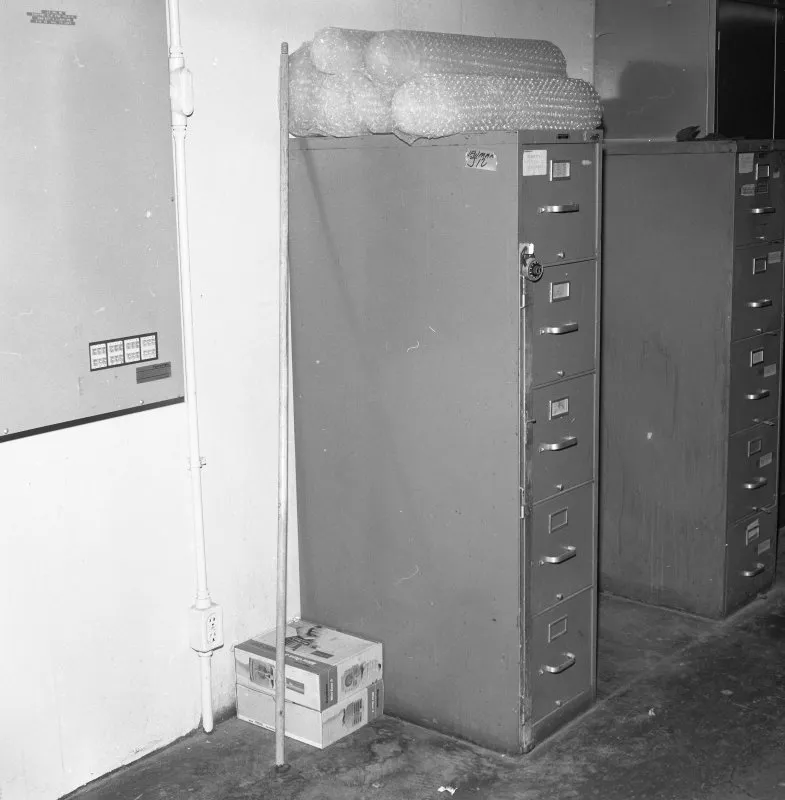
Photo: San Diego Air & Space Museum Archives, Public domain, via Wikimedia Commons
Most small businesses treat records retention as a storage problem. The file cabinet is full, the shared drive is fuller, and no one wants to be the person who deleted something important. So everything stays. That instinct is understandable, but it is not a control. A retention program that keeps every document indefinitely creates cost, slows response to disputes, and expands the data exposed in a breach.
The better approach is defensible destruction: a written schedule, a consistent process, and evidence that records were destroyed in the ordinary course rather than selected for convenience. For a small US business, the schedule does not need to be elaborate. It needs to be specific enough to follow and flexible enough to stop when a legal hold applies.
The Cost of Keeping Everything
Retaining all records feels safe because it avoids a decision. In practice, it transfers risk rather than reducing it. Older records may be incomplete, inconsistent, or stored in formats that are no longer readable. When a dispute or audit arises, the business may have to search and produce years of irrelevant material. A data breach involving archived HR files or payroll records can be more damaging than one involving current operating files.
Defensible destruction is not about eliminating evidence. It is about keeping records for the period required by law, contract, or business need, and then destroying them under a documented routine. The routine is what makes the destruction defensible.
A Plain-English Retention Matrix
The periods below are common starting points for small US businesses. They are not a substitute for legal advice. State law, industry regulation, contract terms, and pending disputes can require longer retention.
| Record class | Typical retention period | Destroy when | Control note |
|---|---|---|---|
| Payroll records | 3 to 7 years | After the later of the tax period or employment-law limitation period | Federal wage-hour rules commonly require 3 years; employment tax records commonly require 4 years. Keep state requirements in view. |
| Tax returns and supporting schedules | 3 to 7 years | After the return is filed and the assessment period closes | The general federal period is 3 years, but longer periods apply to underreported income or failure to file. |
| Contracts and amendments | 7 years after expiration | After all obligations, warranties, and indemnities have ended | Include side letters, change orders, and termination notices. |
| HR files and personnel records | 3 to 7 years after termination | After the employment-law limitation period and any claim resolution | Separate medical and benefits records from general personnel files. |
| Receipts and expense support | 3 to 7 years | After the related tax return and reimbursement cycle close | Match receipts to the expense report, not to a general inbox folder. |
| Digital backups | Same as source record | When the source retention period ends and no legal hold applies | A backup is not a separate permission to keep data forever. |
Legal Holds Override the Schedule
A retention schedule is not a license to destroy records when litigation, an audit, or an investigation is reasonably anticipated. A legal hold suspends destruction for the affected records until the matter is resolved. The hold should be written, communicated to the people who control the records, and tracked centrally.
The practical control is simple: before any scheduled purge, ask whether a hold applies. If the answer is unclear, pause destruction for that record class and document the reason. A documented pause is defensible. A routine deletion after a hold notice is not.
The Annual Purge Ritual
A retention schedule fails when it lives only in a policy manual. The annual purge ritual turns it into an operating control. Choose a fixed month, assign an owner, and follow the same sequence each year.
- Confirm the schedule is current. Review the matrix against tax, employment, and contract requirements. Update it before destroying anything.
- Check for legal holds. Obtain a written confirmation that no known hold applies to the records scheduled for destruction.
- Generate a destruction list. List the record class, date range, storage location, and retention rule. Do not destroy by folder name alone.
- Destroy securely. Use cross-cut shredding for paper and verified deletion for digital records. For third-party storage, obtain a certificate of destruction.
- Log the result. Record what was destroyed, when, by whom, and under which schedule entry. Keep the log, not the destroyed records.
The log is the evidence of defensibility. If a question arises later, the business can show that destruction followed a written schedule rather than an ad hoc cleanup.
Digital Backups Need the Same Rules
Digital records are often retained by accident. Backup systems capture deleted files, email archives preserve old attachments, and shared drives accumulate duplicate folders. A retention program should apply to backups as well as to active systems. Otherwise, a record destroyed in the main system may still exist in three backup locations.
The control does not require deleting every backup immediately. It requires aligning backup retention with the source record schedule, limiting access to archived data, and confirming that backup vendors follow the business retention rules. If a backup is kept longer for disaster-recovery purposes, that exception should be documented and separated from the ordinary records retention schedule.
Make Destruction Defensible
The goal is not to keep less for its own sake. The goal is to keep what the business needs, for as long as it needs it, and to remove the rest under a process that can be explained. A one-page schedule, an annual purge, and a destruction log are modest controls. Together they reduce storage cost, limit discovery exposure, and make the records program easier to defend.